
Digital technology is the backbone of modern society shaping how we communicate, work, learn, create, govern, and interact with the world. In 2026, it has become more than a tool; it’s a fundamental force driving economic growth, innovation, and human connection.
But what exactly is digital technology?
At its core, digital technology refers to any system, device, tool, or process that uses digital data binary code (0s and 1s) — to function. This includes everything from the smartphone in your pocket to massive cloud data centers, advanced AI models, and connected smart devices in homes and factories.
This comprehensive guide breaks down every aspect of digital technology from foundational concepts to real‑world applications, benefits, challenges, and what the future holds. Whether you’re a student, professional, entrepreneur, or enthusiast, this article will elevate your understanding to match the demands of 2026.
Table of Contents
Definition of Digital Technology
Technology represents the range of tools and systems that encode information into digital data. This contrasts with analog systems, which represent data with continuous signals. Digital systems rely on discrete values (e.g., bits), enabling speed, accuracy, replication, storage, and programmable computing.
Broadly, digital technology includes:
- Hardware — physical devices like computers, phones, sensors, and servers.
- Software — operating systems, apps, platforms, and algorithms.
- Networks — connections such as the internet, intranets, 5G, and Wi‑Fi.
- Data — structured and unstructured information processed by digital systems.
- Platforms — cloud services, databases, analytics engines.
One of the hallmarks of digital technology is its ability to transform raw data into actionable insights, automate processes, and enable scaling that was unimaginable before the digital revolution.
History & Evolution of Digital Technology
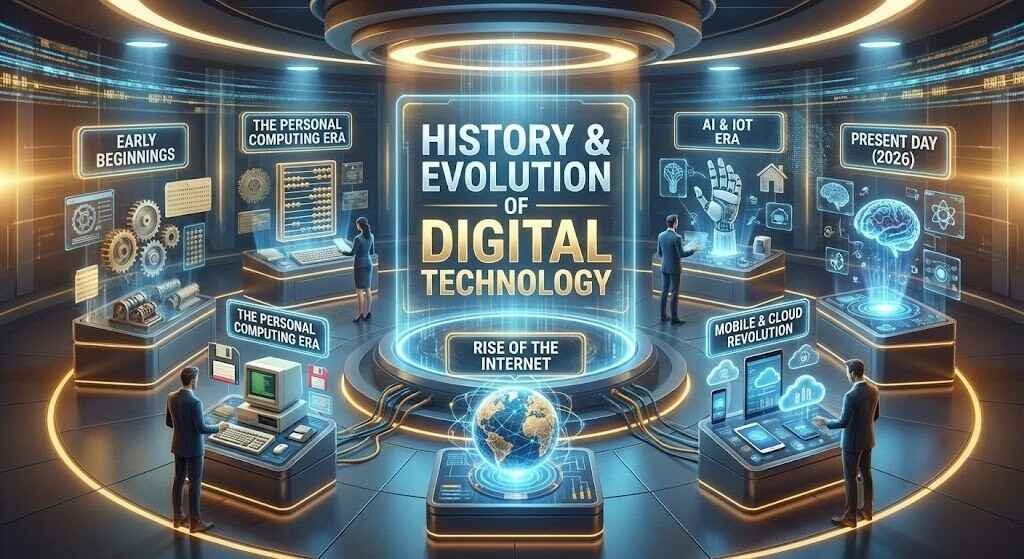
Understanding digital technology today requires a look at its evolution:
Early Beginnings
The foundation of digital tech can be traced back to the 1940s–1950s, with the emergence of electronic digital computers like ENIAC and UNIVAC. These early machines were large, expensive, and limited in scope.
The Personal Computing Era
By the 1970s–1980s, microprocessors enabled personal computers (PCs), bringing computing power to businesses and households. Innovations by companies like Apple, IBM, and Microsoft democratized access to digital systems.
Rise of the Internet
The 1990s saw exponential growth in connectivity with the public introduction of the World Wide Web. Email, web browsers, and early e‑commerce laid the groundwork for global digital communication and business.
Mobile & Cloud Revolution
In the 2000s–2010s, mobile devices and cloud computing transformed how we access and store data. Smartphones became ubiquitous, and cloud platforms like AWS, Azure, and Google Cloud powered scalable services.
AI & IoT Era
The 2020s onward brought artificial intelligence (AI), machine learning (ML), data analytics, automation, blockchain, and the Internet of Things (IoT) into mainstream use — intertwining digital tech with every major industry.
Present Day (2026)
Today, digital techn is defined by intelligence at scale, decentralized systems, immersive experiences, and pervasive connectivity — reshaping economies, societies, and human behavior.
Core Components of Digital Technology
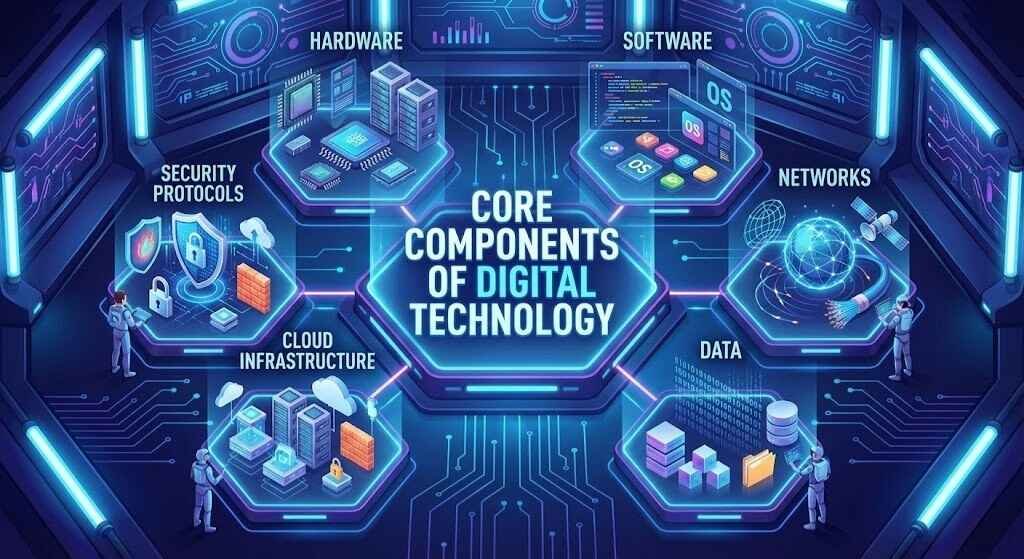
To understand how digital techn works, we must break down its core components:
1. Hardware
The physical machines and devices that support digital systems, including:
- Computers, laptops, mobile devices
- Sensors for IoT
- Servers and data centers
- Wearables (smartwatches, health devices)
2. Software
Software dictates the behavior of digital systems:
- Operating systems (Windows, iOS, Linux)
- Applications (from productivity tools to complex enterprise platforms)
- System firmware and embedded software
3. Networks
Networks enable communication between devices:
- Internet and broadband
- 5G and future wireless standards
- Local networks in businesses and homes
4. Data
Data is the lifeblood of digital systems:
- Collected from sensors, users, transactions
- Processed for insights, predictions, personalization
- Stored in databases or data lakes
5. Cloud Infrastructure
Cloud computing allows scalable storage and computing power without owning physical infrastructure. It enables:
- Elastic computing
- Big data analytics
- AI deployment
- Remote collaboration
6. Security Protocols
As digital systems grow, securing them becomes essential:
- Encryption
- Identity and access management
- Firewalls and threat detection systems
Together, these components create the digital ecosystems that power modern life.
Types & Categories of Digital Technology
Digital tech covers a wide spectrum. Below are the major categories:
Communication Technology
Enhances human and machine interactions:
- Email, messaging apps
- Video conferencing (Zoom, Teams)
- Social platforms
Information Technology
Supports data processing and storage:
- Cloud services
- Databases and analytics
- Enterprise software
Consumer Technology
Devices used daily by individuals:
- Smartphones, tablets
- Smart TVs
- Gaming systems
Operational Technology
Used in industrial environments:
- Robotics and automation
- Sensors in manufacturing
- Control systems
Media & Entertainment Tech
Transforms how content is created and consumed:
- Streaming platforms
- Digital editing suites
- AR/VR experiences
Emerging & Advanced Technologies
These are shaping the future:
- Artificial Intelligence (AI) & Machine Learning (ML)
- Blockchain and Web3 platforms
- Quantum computing
- Metaverse and mixed reality
Each category plays a distinct role, but many overlap in converged systems — such as smart cities that mix IoT (operational tech), data analytics (information tech), and connectivity (communication tech).
How Digital Technology Works — A Simple Breakdown
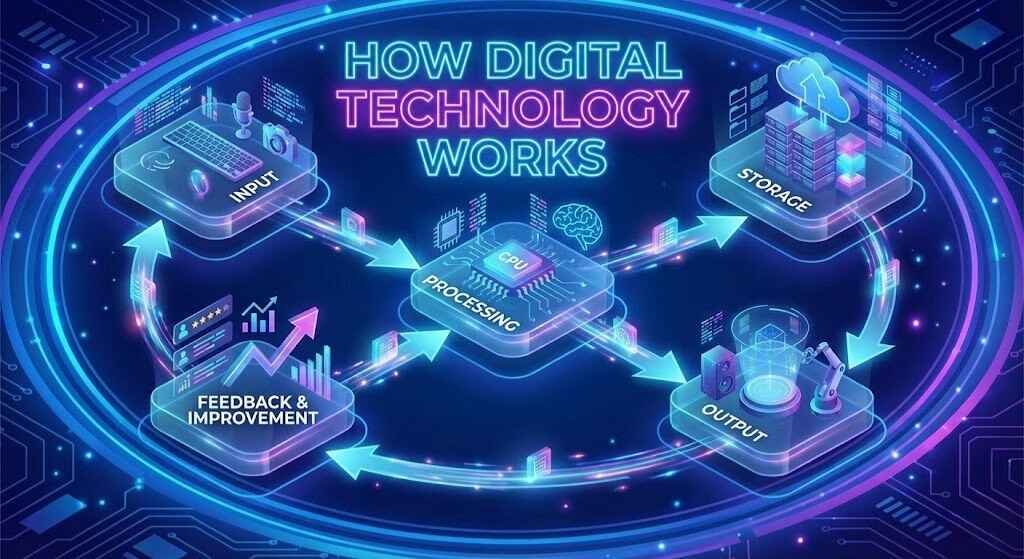
To make this practical, let’s look at how a typical digital system operates:
- Input — Data enters the system (e.g., user clicks, sensor readings).
- Processing — Software and hardware interpret information.
- Storage — Data is stored securely (cloud or local storage).
- Output — Results are displayed or acted upon (reports, actions).
- Feedback & Improvement — System uses insights to optimize.
This cycle enables automation, adaptability, and intelligent decision‑making in digital ecosystems — from simple apps to complex AI platforms powering autonomous vehicles.
Real‑World Examples and Use Cases
Let’s explore how digital tech impacts different sectors:
Healthcare
Digital tools are transforming patient care:
- Telemedicine enabling remote consultations
- Digital health records improving accuracy and access
- Wearables tracking vital health metrics
- AI assisting in diagnostics and personalized treatment plans
This makes healthcare more accessible, proactive, and patient‑centric.
Education
Digital techdemocratizes learning:
- Online learning platforms (MOOCs)
- Virtual classrooms and collaborative tools
- AI tutoring systems that personalize learning
- Gamification to increase engagement
Students can learn anytime, anywhere, and at their own pace.
Retail & E‑Commerce
Modern shopping experiences leverage:
- Online marketplaces and mobile apps
- Digital payments and wallets
- Personalized recommendations using data analytics
- Augmented Reality (AR) for virtual try‑ons
These experiences increase convenience and customer loyalty.
Finance & Banking
The finance sector uses digital techn for:
- Online and mobile banking
- FinTech innovations like buy‑now‑pay‑later
- Fraud detection powered by AI
- Blockchain for secure and transparent transactions
This creates faster, safer, and more inclusive financial services.
Transportation
From ride‑hailing apps to autonomous vehicles:
- GPS and real‑time traffic systems
- Predictive maintenance in logistics
- Smart transit solutions
Digital tech improves safety, efficiency, and connectivity.
Manufacturing
Smart factories combine:
- Industrial IoT sensors
- Robotics and automation
- Predictive analytics for supply chain
This enhances productivity and reduces waste.
These examples represent only a fraction of how digital tech reshapes industries every day.
Benefits & Advantages of Digital Technology
Digital tech delivers transformative benefits:
1. Enhanced Efficiency
Automation reduces manual workload, speeds up processes, and increases accuracy. Businesses can achieve more with fewer resources.
2. Better Communication
Global connectivity allows instant collaboration, breaking cultural and geographic barriers.
3. Improved Access to Services
Education, banking, healthcare, and government services become accessible even in remote areas.
4. Cost Savings
Cloud platforms, automation, and digital workflows reduce operational expenses.
5. Innovation Enablement
Organizations innovate faster — launching digital products, new business models, and data‑driven strategies.
6. Data‑Driven Insights
Advanced analytics and AI enable smarter decision‑making based on real‑time trends.
These benefits drive economic growth, raise living standards, and create new opportunities for individuals and enterprises alike.
Challenges & Risks of Digital Technology
Despite its potential, digital tech also presents challenges:
Cybersecurity Risks
More connectivity increases cyberattack surfaces — requiring robust security solutions.
Privacy Concerns
Personal data collection raises ethical and regulatory questions.
Digital Divide
Not everyone has equal access to digital tools — creating disparities.
Job Displacement
Automation shifts job markets — replacing routine tasks but also creating new tech‑oriented roles.
Ethical Concerns
AI bias, surveillance, and algorithmic transparency are ongoing societal debates.
Addressing these challenges involves policy, education, ethical design, and inclusive digital strategies.
Future Trends in Digital Technology (2026 and Beyond)
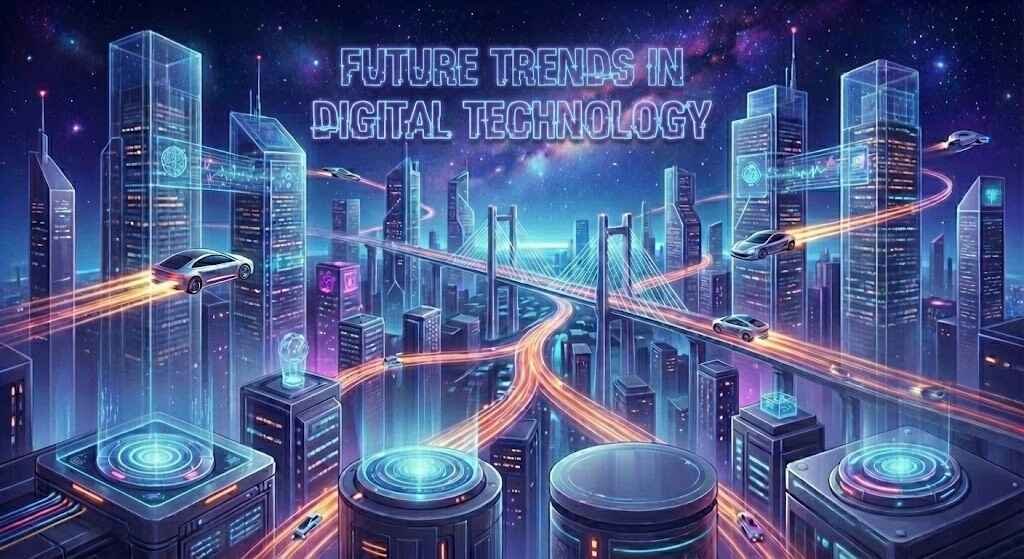
The future of digital technology is exciting, disruptive, and transformative:
AI Everywhere
AI will continue to permeate healthcare, finance, education, and creative industries.
Metaverse Expansion
Virtual and mixed reality environments will create new avenues for work, entertainment, and social interaction.
Decentralized Systems
Blockchain and Web3 will empower individuals with ownership of digital identity and assets.
Sustainable Tech
Green computing and energy‑efficient systems will become mainstream.
Human‑Machine Collaboration
Emerging tools will augment human capabilities rather than replace them — creating a hybrid future.
These trends represent how our digital ecosystem will evolve — technology becoming more intelligent, immersive, ethical, and interconnected.
Conclusion – The Role of Digital Technology in Our Lives
Digital technology is no longer a luxury or novelty — it’s essential infrastructure for everyday life and global progress. As 2026 continues, understanding digital tech
is critical for navigating careers, businesses, innovation, and societal change.
Digital fluency empowers individuals to adapt, compete, and thrive. For organizations and governments, strategic adoption ensures resilience, growth, and inclusive development.
From personal convenience to global impact, digital tech defines the present and shapes the future.
FAQs – Top Questions About Digital Technology
What does digital technology include?
Digital tech includes software, hardware, networks, data systems, cloud platforms, AI, IoT, and more.
Is digital technology the same as ICT?
Digital tech is a part of ICT (Information and Communication Technology), but ICT is broader, including analog systems too.
How does digital technology impact jobs?
It automates routine work but also creates new tech‑driven, high‑skilled opportunities.
Is digital technology safe?
With proper cybersecurity, privacy practices, and regulations, digital systems can be secure.
What will be the biggest trend in digital technology?
AI, immersive tech (AR/VR), decentralized systems (Web3), and sustainable digital solutions.